
Society of Academic Emergency Medicine (SAEM Annual Conference) 2024:
I gave a talk at the SAEM 2024 conference in Phoenix, Arizona, arguing the need for Emergency Physicians to understand the links between climate change and health. This was a really fun topic to speak on, and the format was “TED” style. I made it more challenging by using a hook in Taylor Swift. The title of the talk was “Climate Change; We need our Taylor Swift Moment”. Here, I will outline the topline topics and the references for attendees to look back on.
US Congress and Climate:
Planetary scientist Carl Sagan testified to Congress. 1
<iframe width="677" height="508" src="https://www.youtube.com/embed/Wp-WiNXH6hI" title="Carl Sagan testifying before Congress in 1985 on climate change" frameborder="0" allow="accelerometer; autoplay; clipboard-write; encrypted-media; gyroscope; picture-in-picture; web-share" referrerpolicy="strict-origin-when-cross-origin" allowfullscreen></iframe>The NFL:
Here, I discuss a news article that describes “The Taylor Swift Effect” and how it applies to the NFL viewership numbers since the announcement of her relationship with Kansas City Chiefs player Travis Kelce. 2

Climate Change and Healthcare:
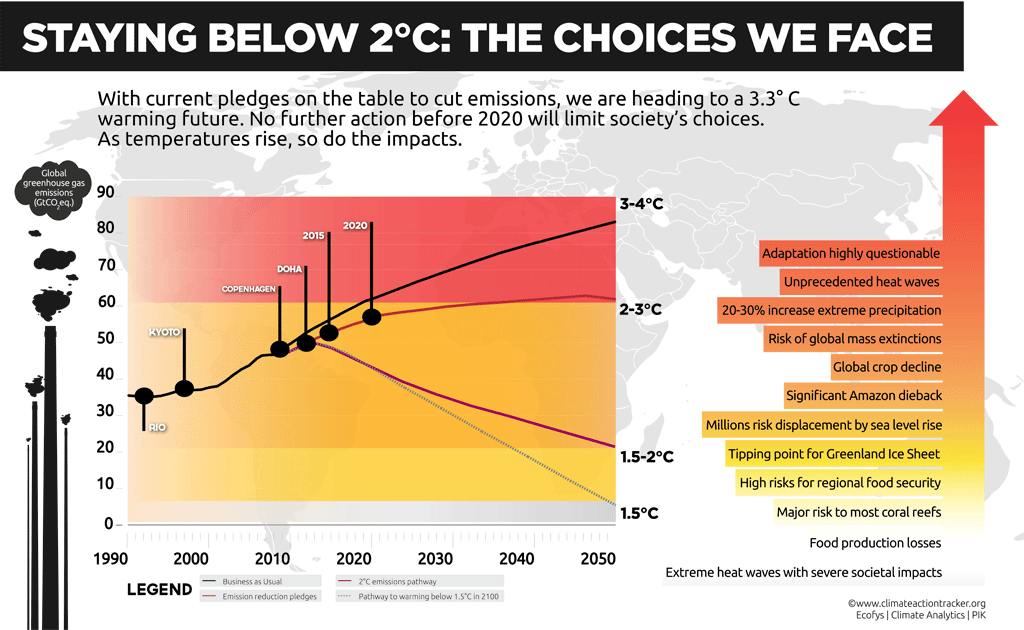
Human activity changes our climate; this is not a conspiracy theory. Over 97% of climate scientists are in agreement. 3 The agreed safe level of carbon in our atmosphere is 350PPM, yet today, we sit at 420PPM. 4 If we don’t reverse this, we risk global temperature increases above 3C by the end of this century, at which point we risk irreversible climate destabilization. 5 This is of utmost importance to healthcare providers for two main reasons. First, we are a significant contributor to the problem with the healthcare sector, which is responsible for greater than 10% of total emissions in the US. It would be among the top 15 global emitters if it were a country. 6

Climate Change Related Illness:
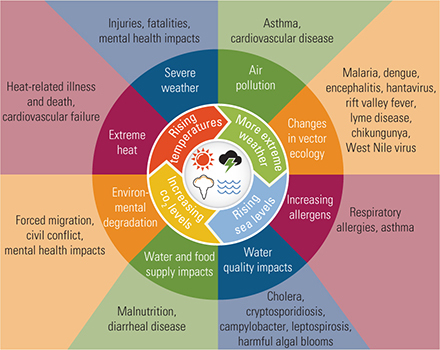
Climate change is related to a range of illnesses, including “unnatural” disasters, heat illness, cardiorespiratory disease exacerbation, and psychiatric illness. 7–11
Education:
We have a role as healthcare providers to understand better how climate change is related to health. This can be done in medical school, residency, and fellowship training, and when providers are out in the community. We should be talking to patients about how the disease is related to climate change and, in doing so, “connect the dots” for the patient. 12–14
Emergency Readiness:
There are direct links between emergency department readiness and patient morbidity and mortality. This isn’t surprising but should raise concern as the challenges of dealing with climate change-related “unnatural disasters” make for unique hurdles. 8,15

Sustainability:
We can make our healthcare systems more sustainable by making adjustments to how we use and produce energy. Switching energy systems to be electrified and, in some cases, reusable achieves emissions reductions as well as sustainability goals. 16
Quality Improvement:
We should focus on undertaking sustainability projects through mandatory quality improvement while in graduate medical training. Instead of doing these projects that last for the duration of a trainee’s time at a hospital, make them generational and aligned with institutional goals for sustainability. 17
Take action:
- Prepare your department readiness through the climate change lens
- Undertake sustainability projects through the quality improvement lens
- Take person actions
- Change your energy election to the renewable option with your electricity provider
- Eat a plant-rich diet 18
- Vote for politicians who have demonstrated a willingness to take action on climate change
Author: Dr Adrian Cois, MD
Assistant Professor
Emergency Medicine
@dr_cois
References:
1. Carl Sagan testifying before Congress in 1985 on climate change – YouTube. Accessed April 27, 2024. https://www.youtube.com/watch?v=Wp-WiNXH6hI
2. Wickman K. Taylor Swift and Travis Kelce’s Relationship Timeline, From Eras Tour to the Super Bowl. Vanity Fair. Published February 1, 2024. Accessed April 27, 2024. https://www.vanityfair.com/style/taylor-swift-travis-kelce-relationship-timeline-eras-tour-super-bowl
3. Lewandowsky S. Popular consensus: climate change is set to continue. Psychol Sci. 2011;22(4):460-463. doi:10.1177/0956797611402515
4. Ebi KL, Hess JJ, Watkiss P. Figure 8.1, Impacts of Climate Change on Human Health. Published October 27, 2017. Accessed April 28, 2024. https://www.ncbi.nlm.nih.gov/books/NBK525226/figure/ch8.sec2.fig1/
5. map.gif 1,024×630 pixels. Accessed April 28, 2024. https://cdn.climatechangenews.com/files/2012/12/map.gif
6. Eckelman MJ, Sherman J. Environmental Impacts of the U.S. Health Care System and Effects on Public Health. PloS One. 2016;11(6):e0157014. doi:10.1371/journal.pone.0157014
7. Calkins MM, Isaksen TB, Stubbs BA, Yost MG, Fenske RA. Impacts of extreme heat on emergency medical service calls in King County, Washington, 2007-2012: relative risk and time series analyses of basic and advanced life support. Environ Health Glob Access Sci Source. 2016;15:13. doi:10.1186/s12940-016-0109-0
8. Chambers KA, Husain I, Chathampally Y, et al. Impact of Hurricane Harvey on Healthcare Utilization and Emergency Department Operations. West J Emerg Med. 2020;21(3):586-594. doi:10.5811/westjem.2020.1.41055
9. Lu S, Zhao Y, Chen Z, Dou M, Zhang Q, Yang W. Association between Atrial Fibrillation Incidence and Temperatures, Wind Scale and Air Quality: An Exploratory Study for Shanghai and Kunming. Sustainability. 2021;13(9):5247. doi:10.3390/su13095247
10. Haikerwal A, Akram M, Sim MR, Meyer M, Abramson MJ, Dennekamp M. Fine particulate matter (PM2.5 ) exposure during a prolonged wildfire period and emergency department visits for asthma. Respirol Carlton Vic. 2016;21(1):88-94. doi:10.1111/resp.12613
11. Sorensen CJ, Salas RN, Rublee C, et al. Clinical Implications of Climate Change on US Emergency Medicine: Challenges and Opportunities. Ann Emerg Med. 2020;76(2):168-178. doi:10.1016/j.annemergmed.2020.03.010
12. Wellbery C, Sheffield P, Timmireddy K, Sarfaty M, Teherani A, Fallar R. It’s Time for Medical Schools to Introduce Climate Change Into Their Curricula. Acad Med J Assoc Am Med Coll. 2018;93(12):1774-1777. doi:10.1097/ACM.0000000000002368
13. Kuczmarski TM, Fox J, Katznelson E, et al. Climatizing the internal medicine residency curriculum: A practical guide for integrating the topic of climate and health into resident education. J Clim Change Health. 2021;4:100067. doi:10.1016/j.joclim.2021.100067
14. Giudice C, Rublee CS. Climate Change and Health: Addressing Gaps Through Patient Education in the Emergency Department. Ann Emerg Med. 2023;82(5):611-614. doi:10.1016/j.annemergmed.2023.05.015
15. Ames SG, Davis BS, Marin JR, et al. Emergency Department Pediatric Readiness and Mortality in Critically Ill Children. Pediatrics. 2019;144(3):e20190568. doi:10.1542/peds.2019-0568
16. Austin’s Ambulances Go Green. EMS World. Accessed January 15, 2021. https://www.emsworld.com/article/10318930/austins-ambulances-go-green
17. Vacharathit V, Walsh RM, Utech J, Asfaw SH. Action in Healthcare Sustainability is a Surgical Imperative: This is a Novel Way to Do It. J Surg Educ. 2022;79(2):275-278. doi:10.1016/j.jsurg.2021.09.002
18. Food in the Anthropocene: the EAT–Lancet Commission on healthy diets from sustainable food systems – The Lancet. Accessed January 6, 2022. https://www.thelancet.com/journals/lancet/article/PIIS0140-6736(18)31788-4/fulltext
 Medical Bites - Complex Topics Bite Sized
Leave a comment